




![[The Lunch Table] Dubai Chocolate Syndrome: When You Try to Be Everything at Once](https://qhsscardinalchronicles.com/wp-content/uploads/2026/02/the-lunch-table.png)
![[The Lunch Table] Milk before cereal? School life over social life?](https://qhsscardinalchronicles.com/wp-content/uploads/2026/02/screenshot-2025-10-17-at-9.26.03-pm-1200x1198.png)













When my friend told me she chose to give up food and water over social media while fasting for Lent, I was utterly shocked. I couldn’t understand why anyone would sacrifice their basic needs if they had the option to simply stay off social media for a month. Was her social media addiction so overpowering that it trumped her need for nourishment? I thought keeping food and water would be the logical choice, but I guess not for everyone.
Her choice revealed how social media and technology have turned from a luxury to an integral part of many people’s lives. While social media reaps benefits such as communication, connectivity, and creative expression, it also has many intense downfalls that make people choose it over food and water.
Psychological Mechanisms
Many people spend hours on social media platforms, scrolling without a clear purpose. The truth is that social media addiction has much to do with the dopamine loop.
Dopamine is a neurotransmitter and hormone that affects emotions, behavior, and movement and plays a vital role in the brain’s reward system where it causes someone to want and desire and increases their level of curiosity and goal-directed behavior. The dopamine loop is essentially when people open social media and endlessly scroll from one reel to another. This mindless scrolling creates dopamine, essentially causing a dopamine deficit because there is an overload of it. But after they put their phone down, they have an urge to scroll again due to the momentary pleasure they had from scrolling when the brain was producing dopamine. The anticipation of a reward, such as likes, positive interactions, and comments, reinforces this dopamine loop. Social media creates instant and momentary gratification that induces an addictive effect on people. By excessively overstimulating the brain’s reward system, people become addicted to social media.
Social media developers created social media to be a widespread addictive powerhouse. TikTok, for instance, created personalized feeds with push notifications by refining and recommending content based on previous user interactions. After TikTok’s initial release, Facebook and Instagram have adopted infinite scrolling. These platforms have implemented TikTok’s interactive design where content is accessed as a user scrolls forward, allowing users to explore content with no definitive end. It exploits the brain’s reward system by triggering a dopamine release, leading to the desire to move to the next reel to experience emotion. Endless scrolling dysregulates the nervous system and contributes to mental health issues such as depression and anxiety. The relationship between social media and mental health issues can be seen through a study on the effect of limited social media use on the psychological well-being conducted at Iowa State University. The researchers found that after two weeks, college students who decreased their usage of social media to 30 minutes a day had significant improvements in their psychological well-being where their anxiety, depression, FOMO, and loneliness decreased. Essentially, social media developers design these platforms based on psychological principles to make them addictive.
Impact on Teens
Social media may be positive in some ways, such as connecting others, creating an accessible abundance of information, and relieving stress for a short period. A 2022 survey of American teenagers and their parents demonstrated that social media helped 58% of respondents feel more accepted, 67% felt it created a supportive platform, 71% thought it helps show their creative side, and 80% felt more connected with their friends.
However, social media disrupts sleep and physical activity due to how much time teens spend on platforms. Yale Medicine describes a research study of American teens (ages 12-15) found that those who used social media over three hours a day faced twice the risk of damaged mental health, showing symptoms of depression and anxiety. There is a significantly higher concern for harm in teenage girls and those with already poor mental health.
Insufficient sleep has detrimental effects on a student’s academic performance. Less sleep hinders cognitive function by impairing a student’s ability to concentrate and reduces memory consolidation, making it harder for students to absorb and retain information. It also impairs student’s ability to solve complex problems and think critically. Sleep deprivation can consequently lead to increased lateness and absences, difficulty performing well on exams, and procrastination—essentially a lower overall academic performance. Increased anxiety, depression, higher risk of illness, and behavioral shifts are all effects caused by reduced sleep and, in turn, by students spending an excessive amount of time on social media, caused by their addiction to social media.
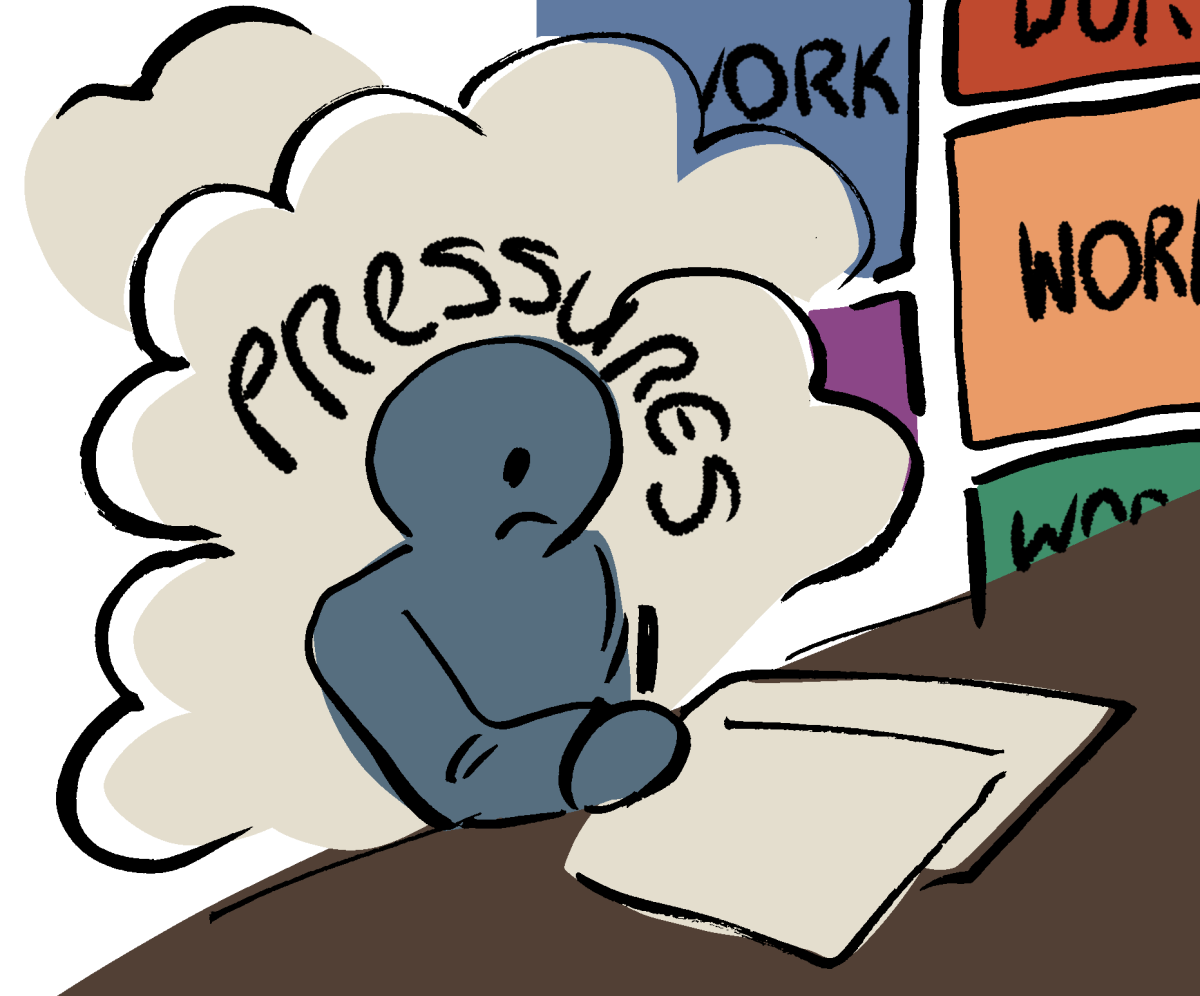
With most teens using social media, social pressures are inevitable. Teens seek out connections with others and experience FOMO (fear of missing out), leading to excessive and frequent use of social media. Teens with low self-esteem might also seek validation and attention online. For high school students experiencing the constant stress of a public education system, social media is used as a coping mechanism, trying to find some instant relief in the online world. However, this momentary relief can lead to teens experiencing cyberbullying, body image issues, eating disorders, and poor sleep quality caused by social media. For example, a PLOS Global Public Health’s review of 50 studies across 17 countries from 2016 to 2021 demonstrated that online overexposure to unrealistic physical standards can trigger eating disorders contributing to a misleading sense of self, particularly amongst girls. Social media is also a way for people to exploit teens, threaten them, and enable predatory behaviors.
Social media creates a cycle of addiction that is fed by the brain’s craving for validation and engagement. If someone feels bored, lonely, or stressed, they’ll use an accessible social media platform to relieve their negative feelings, only to create a negative feedback loop. The more time they spend on social media, the less time they have for real-life activities necessary to their well-being, such as sleeping. But when their academic performance worsens, further negative feelings emerge, and they go back to using addictive social media.
Potential Solutions
Social media has profound effects on a teen’s development, so it is crucial to learn how to break away from the addictive cycle. Anyone who uses social media can set time limits, find alternative activities to utilize their time, find different stress-reduction techniques, and turn off notifications on social media platforms. Instead of feeling the need to go on social media, they can call their friends and family or keep their phones away from them.
Social media may allow people to connect with others, explore their identities, and learn new information, but teens must be cautious about their use of social media and reduce their dependence on it. By adopting slight changes to their lifestyle, teens can slowly move away from the adverse effects of social media.
So, instead of mindlessly scrolling for hours upon hours on social media and regretting it afterward, use the psychology behind this addiction to improve the quality of your life.