




![[The Lunch Table] Dubai Chocolate Syndrome: When You Try to Be Everything at Once](https://qhsscardinalchronicles.com/wp-content/uploads/2026/02/the-lunch-table.png)
![[The Lunch Table] Milk before cereal? School life over social life?](https://qhsscardinalchronicles.com/wp-content/uploads/2026/02/screenshot-2025-10-17-at-9.26.03-pm-1200x1198.png)










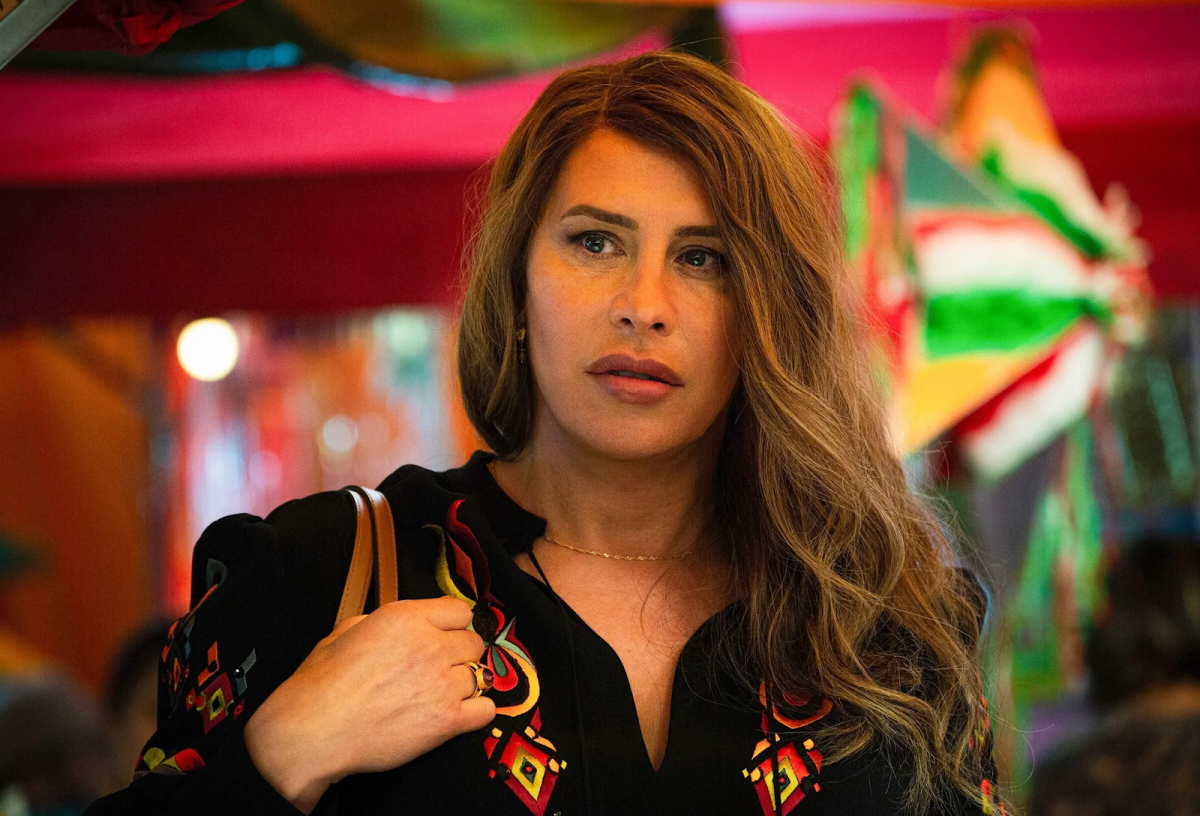
As a self-declared cinaphille, I enjoy any opportunity to watch a movie with an unconventional spin on subject material with odd camera angles or premise. So, when I heard this movie had over 13 Oscar nominations, I went to watch it. However, there are some movies that are so clearly Oscar-Bait that you can see the director planning how to wow the academy, leaving the audience scratching their heads. And no director is a better example of this than Jacques Audiard: A walking stereotype of an old, cisgender French man whose pretentiousness particularly radiates through the screen. He hoped to break genre conventions by creating a story that has no grounds in reality and songs with no melody or rhythm. The plot of the musical was horrendous. It follows the journey of a male Mexican drug lord who transitions into a woman seeking restorative justice for the country’s “disappeared”, the dead and missing persons who have been the victim of drug and crime-related violence. She does this with the help of her lawyer who helps hide her identity as she committed the crimes she was advocating against (shocker). One of the few compliments I can give to this film is that the trans character is portrayed by an actual transgender woman, Karla Sofía Gascón, instead of a cis woman or man in drag. However, her transition is highly unrealistic, where she quickly transforms into a completely different person with no bearing to her past. The musical makes it seem as though her transition completely absolves her of her past crimes. She never really acknowledges the destruction she causes and manipulates her ex-wife back into a relationship by posing as a distant cousin.
But if this movie does not tackle trans identity well, it must speak to the Mexican people and deal with the effects of the cartel’s influence. Yet, I have seen a more nuanced take on the issues of the cartel from a Level One Spanish class making jokes about ICE. Most of the actors could not speak proper Spanish. In fact, Selena Gomez stated that she did not have time for a Spanish Coach, according to Variety Fair. And it clearly sounds like she memorized her lines word for word. Even though I speak very limited Spanish as a “No Sabo” kid and am not the person to judge, many of my Hispanic friends could not make out a word she was saying. The director tried to cover up by making the wife of a cartel leader “Hispanic-American”, a clear cover-up for his favoritism. The other actors were hispanic thankfully. But most came from various different backgrounds, leading to a violent mismatch of accents. The director clearly did not know anything about Mexican culture. The film was entirely made in France and a lot of the mismatch could come from the fact that he could not speak with the actors or rely on important stage instructions without multiple translators. The movie could have taken place on the border or straight in the heart of Mexico City. To Audiard: none of that matters. The movie would be filmed almost exclpuvsly in France. In fact, for even a native Mexican, they would not have been able to tell if this movie was filmed in rural Mexica, on the border, or in the heart of Mexico City. To him, the only thing that matters is his creative vision of the hispanic experience.